
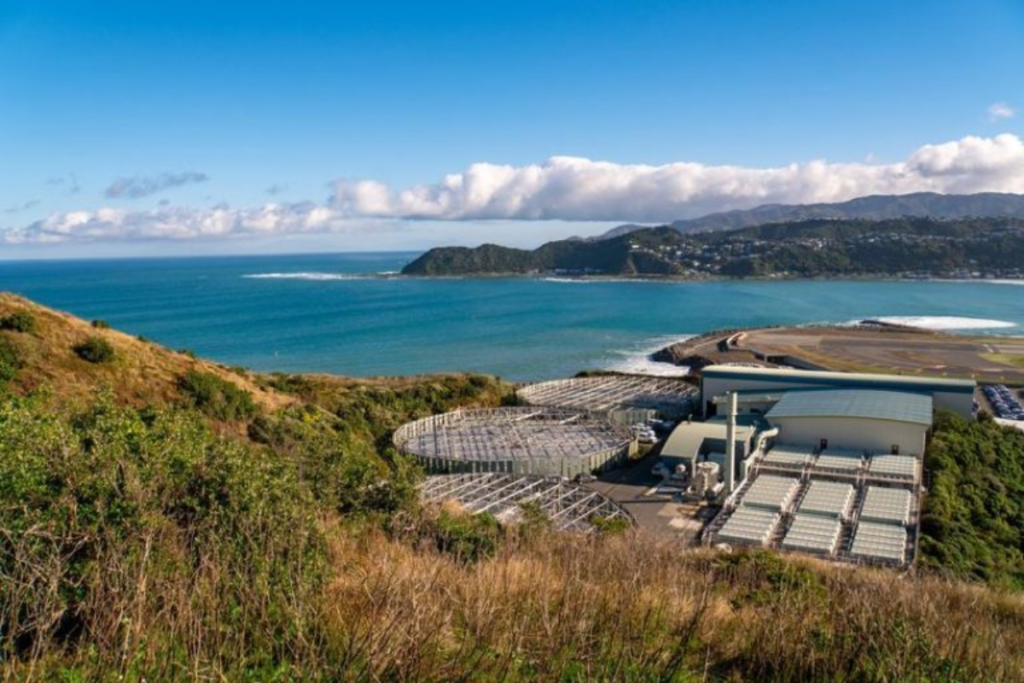


























































Wellington’s Moa Point wastewater treatment plant experienced five flooding events in the months before its major failure on 4 February, a newly released investigation has found.
Engineering consultancy AECOM found hydraulic risks associated with the plant’s temporary bypass system had been identified before the February flooding but had not been resolved.
The investigation records two inundation events in October 2025, two in January 2026 and another on 3 February, the day before extensive flooding knocked out much of the plant.
The earlier incidents were confined to an offline ultraviolet treatment channel and did not flood the wider plant, but they occurred while Moa Point was operating with reduced treatment capacity during major work on its ultraviolet disinfection system.
Wastewater was being directed through a bypass arrangement while that work was under way.
AECOM found risks associated with sending increased wastewater flows through the bypass had been identified during risk assessment work for the UV renewal project.
However, those risks had not been resolved before the February flooding.
The investigation also found an assessment of the hydraulic and air-handling capacity of the altered plant configuration did not appear to have been completed.
Heavy rain increased wastewater flows on the night of 3 February. Air became trapped in the bypass pipe, restricting its ability to carry wastewater through the plant.
Wastewater backed up and eventually flooded large areas of Moa Point, damaging electrical and control systems and leaving the plant unable to provide its normal biological treatment and disinfection.
AECOM said the failure resulted from a combination of technical and organisational factors rather than a single decision or operational failure.
The investigation also identified concerns with the plant’s alarm systems.
Several critical alarms triggered before and during the flooding were not configured as pager alarms requiring immediate operator action.
Other vulnerabilities included critical electrical equipment located below ground and shortcomings in high-water detection.
Fire and Emergency personnel responding to alarms at Moa Point were among the first to alert operations staff that significant flooding had occurred.
Plant operator Veolia has disputed parts of the investigation.
Veolia said the AECOM report was not independent and did not provide a complete account of the circumstances surrounding the failure. It said it was not responsible for controlling the UV upgrade project and had previously raised concerns about aspects of the work.
The report was commissioned by Wellington Water shortly after the February flooding and provided to regional water provider Tiaki Wai on 13 August.
Its public release was delayed while potential implications for the plant’s insurance cover were considered.
Tiaki Wai chief executive Mike Brewster said the report added to the understanding of the failure.
“AECOM’s report is an important addition to our understanding of what happened on February 4, and it’s consistent with the findings of the Crown Review,” Brewster said.
“The findings have directly informed our ongoing work to strengthen resilience across the region’s wastewater network, and as we’ve said we are well underway with the fix.”
Tiaki Wai expects core wastewater treatment at Moa Point to resume in November, with the plant restored to its pre-flood operations by February 2027.
Work to address the underlying hydraulic problem in the bypass system is expected to continue into late 2027.
