





























































Ghostly figures will appear in Nairn Street Cottage’s upstairs windows from Halloween, as Wellington artist Matt Tini turns everyday rituals into an artwork exploring gender, identity and colonial history.
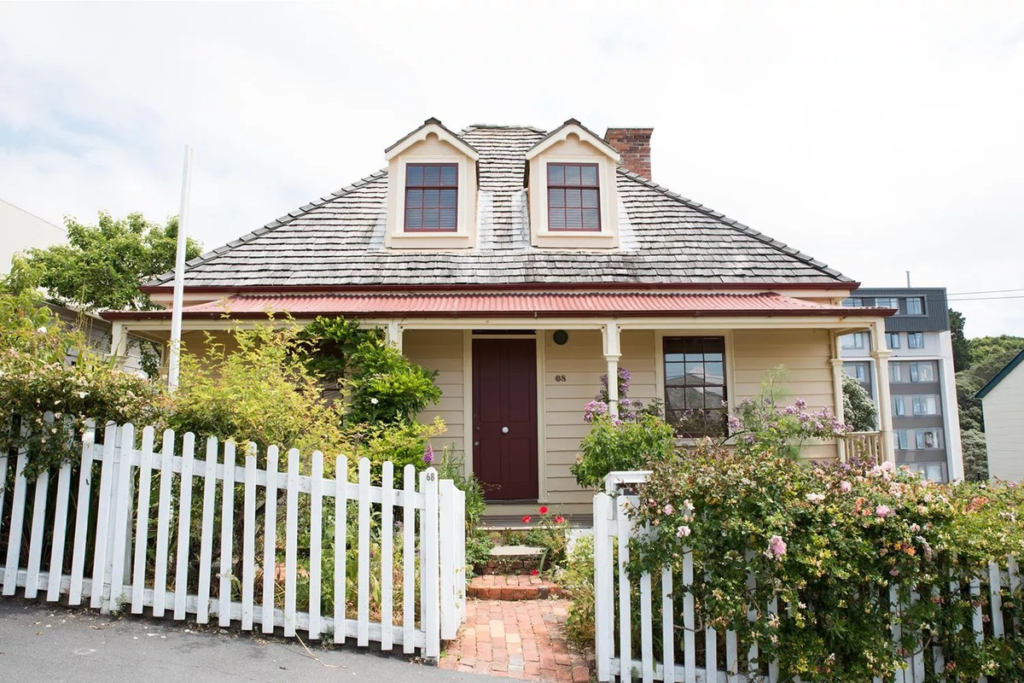
The Craft (his & hers) begins on Saturday 31 October, with projections running each evening from 8pm to midnight. People will be able to watch from the street outside the cottage at 68 Nairn Street, Mount Cook. The building will remain closed during the screenings.
Tini uses his own body in the work, performing rituals involving clothing and personal care. City Gallery Wellington describes the figures as a way of examining how people create and express their identities, and how colonial ideas of gender continue to shape those experiences.
The installation is curated by CIRCUIT for City Gallery and forms a new part of Unsettling Nairn Street, an exhibition inviting contemporary artists to explore the house and the histories of the land beneath it.
For Tini, who lectures at Massey University’s Toi Rauwhārangi College of Creative Arts, photography and video are ways to respond to colonial histories and express his own experience as Māori.
In an interview published by Wellington’s Enjoy Contemporary Art Space in January, he described making art as another way of talking and sharing with people.
“I’m compelled to make things, sometimes for myself and sometimes to share with others,” he said.
Tini also recalled that his first real art-gallery experience was at City Gallery in 2017, when he had just started art school. A Cindy Sherman exhibition, with its many clowns, had been an overwhelming introduction. His new work now joins a programme organised by that same gallery.
The cottage offers a setting with its own history of people deciding which stories and buildings matter.
Carpenter William Wallis built the house in the late 1850s after arriving from England with his wife Catherine. Three generations of the family lived there. Its survival was secured by a community campaign after the city council acquired it in 1974 with demolition in mind.
Heritage New Zealand records that the Colonial Cottage Museum Society fought to preserve the building. The council relented in 1977 and the house opened as a museum in 1980. It is now a Category 1 historic place.
Inside, the wider exhibition brings seven artists’ work into the ground-floor rooms. Co-curator Emma Ng has described how the installations draw attention to traces of the past, including the plants, waterways and family lives associated with the neighbourhood.
George Turner’s beeswax houses carry impressions of gorse, while Paula Collier suspends native Coprosma branches before the nursery’s old wallpaper. Heidi Brickell’s washroom installation refers to the buried Waimapihi and Moturoa waterways. Other works consider the household’s family relationships and the possessions people keep.
Visitors can see the indoor exhibition during the cottage’s regular opening hours. Tini’s work will bring another part of the exhibition into view after dark, through the upstairs windows.
