
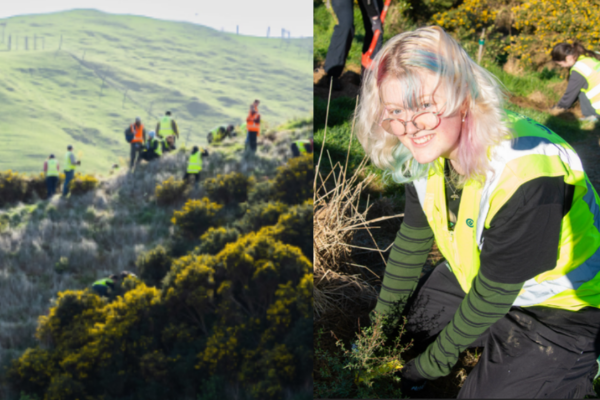
































































More than 180 volunteers will head to Ōhāriu Valley this week to plant 2,500 native trees as part of a long-term project restoring native forest around Wellington.
Students, staff and alumni from Te Herenga Waka, Victoria University of Wellington, will take part in the university’s annual planting days on Friday 24 and Saturday 25 July.
This is the sixth year of the Growing our Future project, which has already seen more than 23,000 trees planted at the site.
Children from the university’s on-site University Kids childcare centre will also take part this year, learning how to plant trees before developing a garden in their own backyard.
University Kids Fairlie Terrace head of complex Leanna Miratana said the centre regularly took children on beach trips, forest walks and other outings that helped them connect with nature.
“Being involved in this project will be an amazing hands-on learning experience for them, and a special way to contribute to the environment,” she said.
Growing our Future is a partnership between the university and Wellington City Council.
The university has leased 26 hectares of land from the council for 33 years and is working to restore native forest across the site. Researchers will monitor the forest as it develops.
The planting helps fill a gap in Wellington’s Outer Green Belt, creating safer places for native birds and other wildlife to nest and live.
The project also supports the university’s goal of reaching net zero carbon by 2030.
Fifteen native species have been planted at the site, including kānuka and mānuka.
Researchers and master’s students from the university’s Centre for Biodiversity and Restoration Ecology are monitoring the area as a living laboratory for teaching and research.
Findings from the project are expected to help guide similar forest regeneration work across the lower North Island and upper South Island.
