




































































Wellington’s new water organisation is facing its biggest challenge yet: convincing residents it can be trusted to fix the region’s ageing infrastructure while keeping household costs under control.
Tiaki Wai chief executive Mike Brewster has gone public to defend the organisation after weeks of criticism over rising water bills, billing confusion, staffing costs and questions about how the new entity is being run.
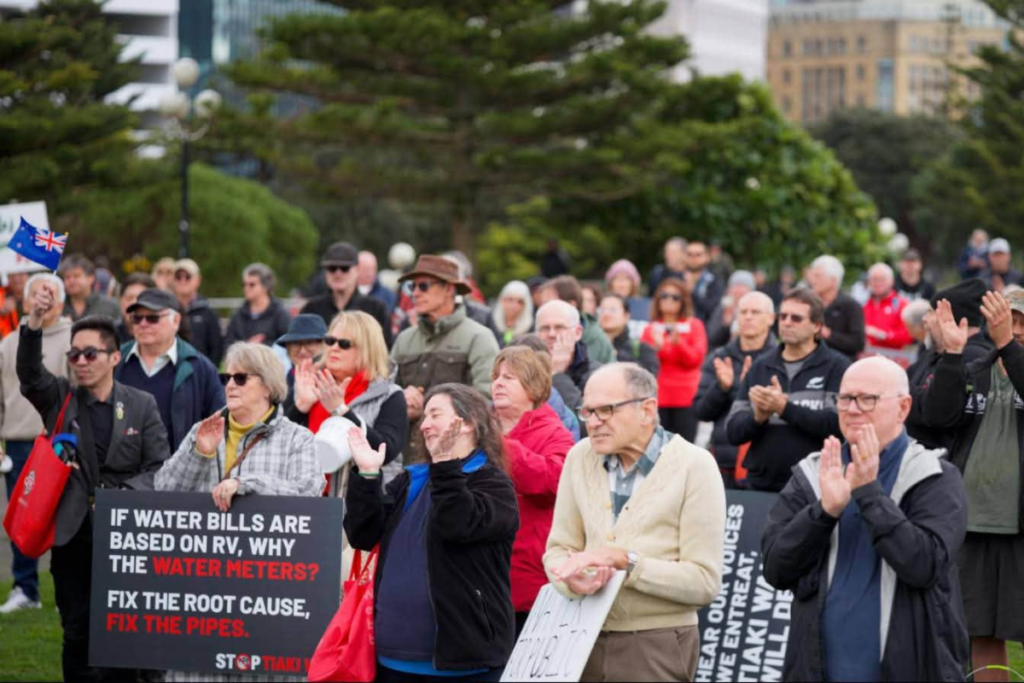
The intervention came as about 300 residents gathered at Parliament to protest concerns over water charges and affordability. Residents questioned whether the new system was fair and whether households could continue to absorb rising costs.
Tiaki Wai was created to take responsibility for Wellington’s drinking water, wastewater and stormwater services as part of the Government’s Local Water Done Well reforms. It replaced the previous Wellington Water model and began operating as a standalone water organisation.
A difficult start
The organisation’s first months have been marked by controversy, particularly around the arrival of separate water bills for households.
Brewster has accepted responsibility for confusion caused when some Tiaki Wai bills arrived before council rates notices, leaving some households believing they faced a much larger combined increase than they ultimately did.
He said the mistake came from assuming rates bills would be issued first and acknowledged the rollout should have been clearer.
The billing problems added to wider concerns from residents already worried about affordability and whether they were receiving value for money.
Residents demand answers
At the Parliament protest, residents raised concerns about rising charges, the way water costs are calculated and whether the new organisation is delivering enough transparency.
Some households have questioned why they are facing significant costs despite already paying rates that included water-related charges in previous years.
The debate has also focused on Tiaki Wai’s own costs, including staffing, offices and executive pay.
Brewster has defended the organisation’s spending decisions, saying Tiaki Wai has taken on responsibilities that require new systems, staff and capability.
Tiaki Wai’s defence

Brewster says the anger over bills must be balanced against the scale of the infrastructure challenge facing Wellington.
The organisation argues decades of underinvestment have left the region with ageing pipes and assets requiring major renewal.
Tiaki Wai has estimated that around $25 billion of investment will be needed over 30 years to address the region’s water infrastructure problems.
Brewster says there is no cost-free way to rebuild the network and that the focus must now be on delivering better reliability, reducing leaks and improving services.
He has also urged residents to separate criticism of the organisation’s decisions from attacks on frontline workers, saying crews working on the network were not responsible for setting household bills.
The trust challenge
The biggest test facing Tiaki Wai may not only be fixing pipes.
It is rebuilding confidence among residents who want reassurance that the organisation responsible for Wellington’s essential water services is transparent, efficient and accountable.
The organisation says it expects to be judged on results.
For many Wellington households, the question is whether Tiaki Wai can convince them those results will justify the cost.
