
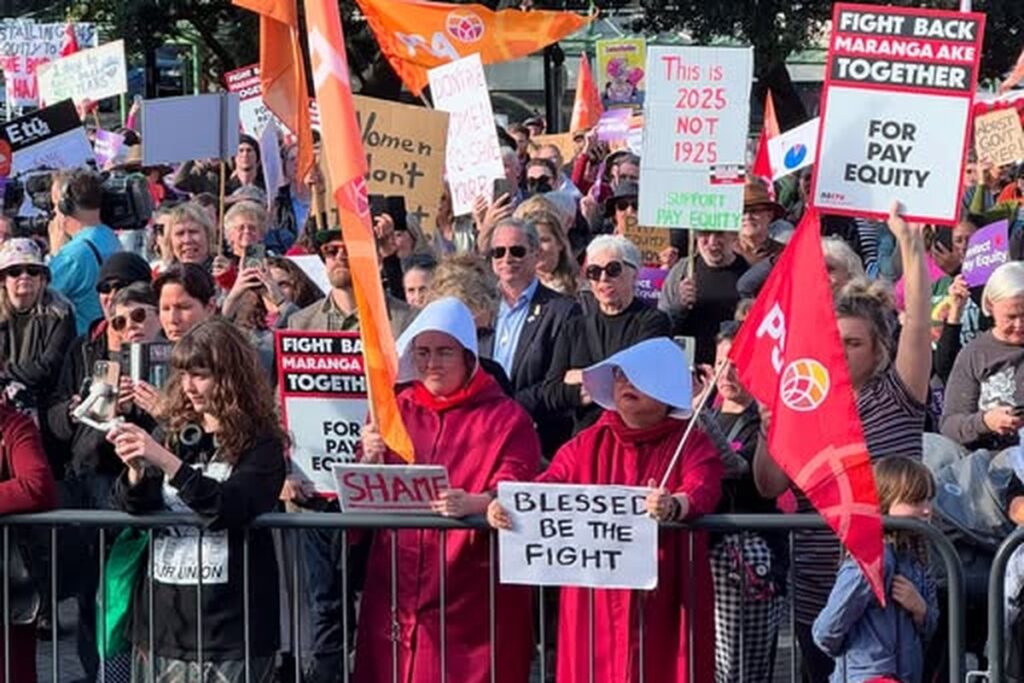

























































The High Court in Wellington has ruled that the Government’s 2025 pay equity changes discriminated against women, but the decision does not automatically restore the claims that were cancelled.
Justice Paul Radich issued a declaration on Thursday 19 November that the amended Equal Pay Act is inconsistent with the right to freedom from sex-based discrimination under the New Zealand Bill of Rights Act.
The case was brought by five unions representing workers across nursing, education, public services and other female-dominated occupations. Their challenge followed the cancellation of 33 pay equity claims when the law was changed under urgency in May 2025.
For workers waiting for those claims to be settled, the distinction between a court victory and a pay rise matters. A declaration formally recognises that legislation breaches protected rights; it does not strike the legislation down or itself award a settlement.
Pay equity addresses whether work done predominantly by women has been undervalued because of sex. It compares different jobs of equal value, rather than simply requiring equal pay for men and women doing the same job.
When introducing the changes, Workplace Relations and Safety Minister Brooke van Velden argued that the existing process needed stronger evidence requirements and a more workable, financially sustainable framework. The Government raised the female-workforce threshold from 60 to 70 percent and required that level to have applied for at least 10 consecutive years.
Existing unsettled claims were discontinued, although new claims could be brought under the revised rules. Review clauses in existing settlements were also made unenforceable.
RNZ reported that Radich found the changes were primarily driven by savings and that the Crown had not provided tangible evidence the previous system was failing. He also found less harmful options were available, including allowing existing claims to continue.
The unions did not succeed on every argument. The court rejected their separate contention that passing the changes without consultation breached their rights, finding there was no legal requirement to consult before introducing a bill.
Public Service Association national secretary Fleur Fitzsimons called for the previous framework and cancelled claims to be restored. The PSA says the cancelled claims affected more than 150,000 women, including care and support workers.
The joint case involved the PSA, New Zealand Nurses Organisation, NZEI Te Riu Roa, Post Primary Teachers’ Association and Tertiary Education Union.
Under the Bill of Rights Act, once a declaration becomes final, the Attorney-General must notify Parliament and the responsible minister must formally report the Government’s response. An appeal remains possible. For affected workers, restoring the old claims still requires further action beyond Thursday’s ruling.
